A Review of CALM's “The Last Photo” Campaign and Its Effectiveness in Suicide Prevention
Introduction
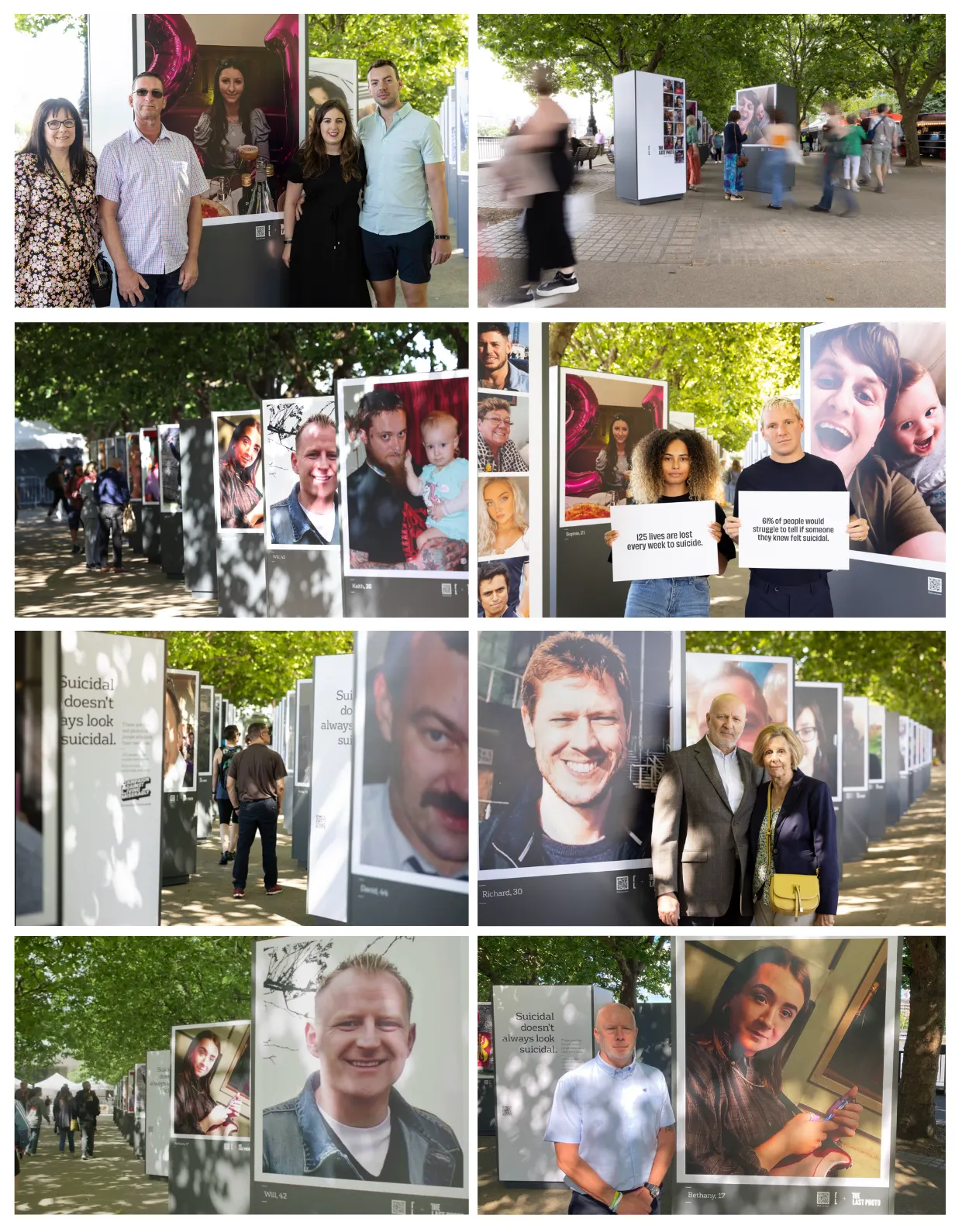
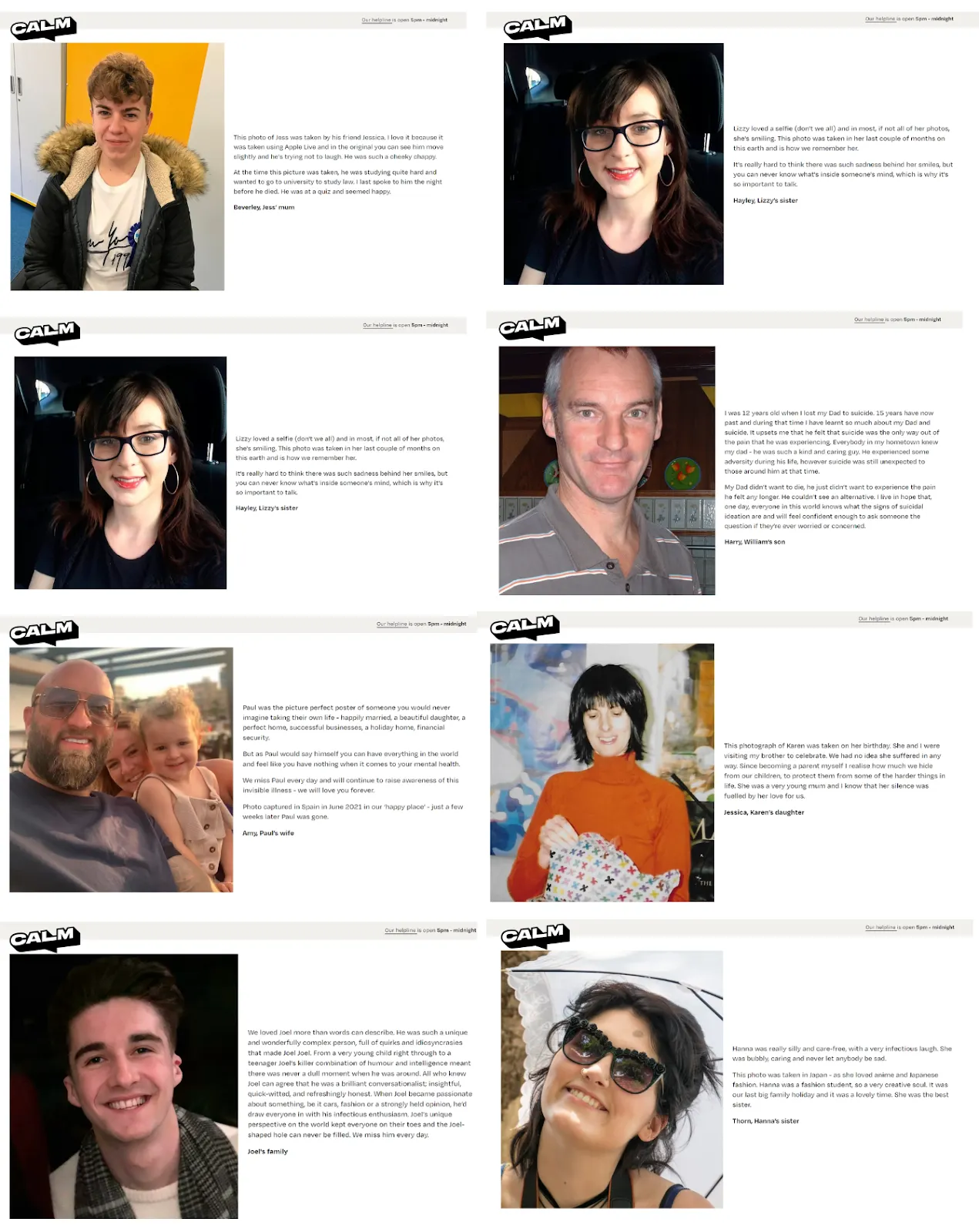
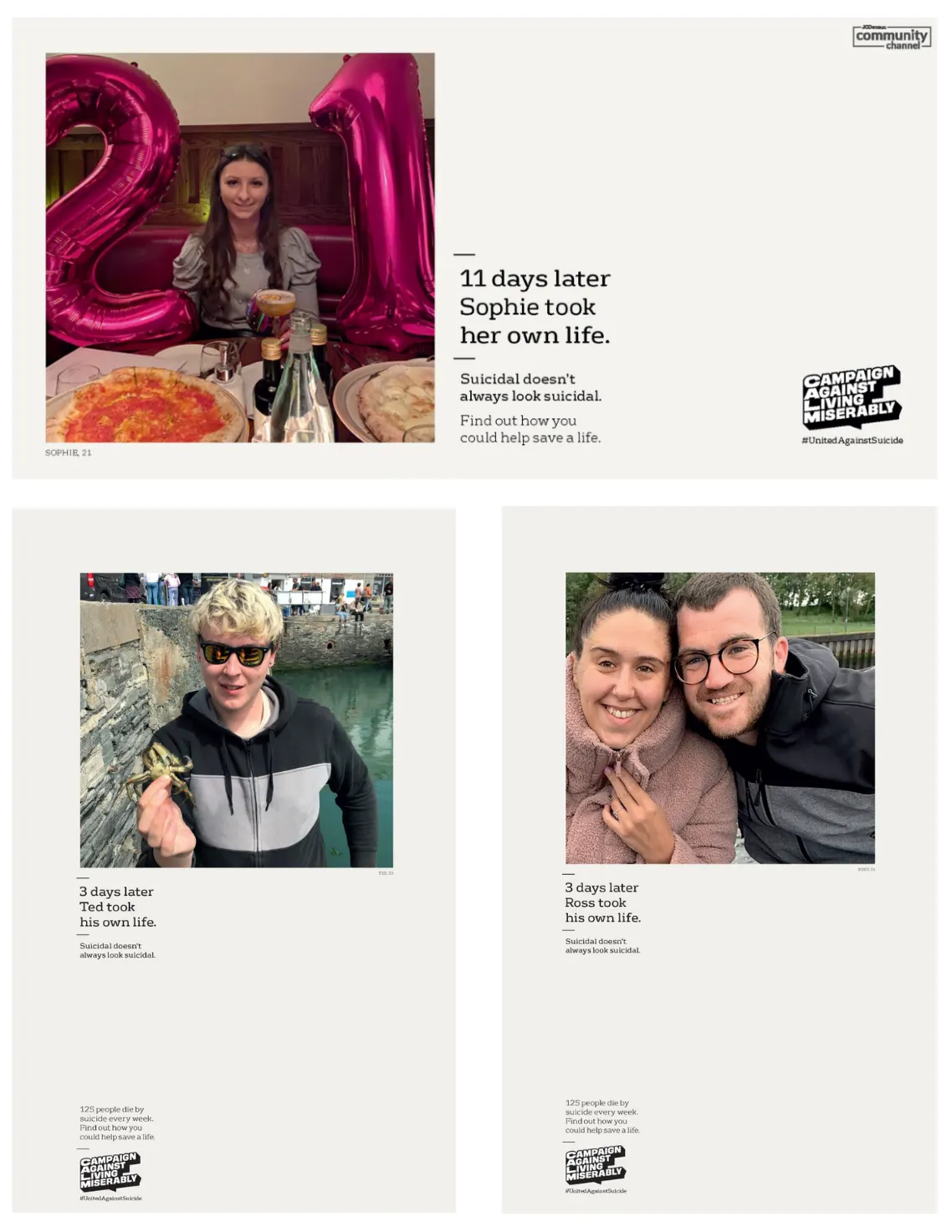
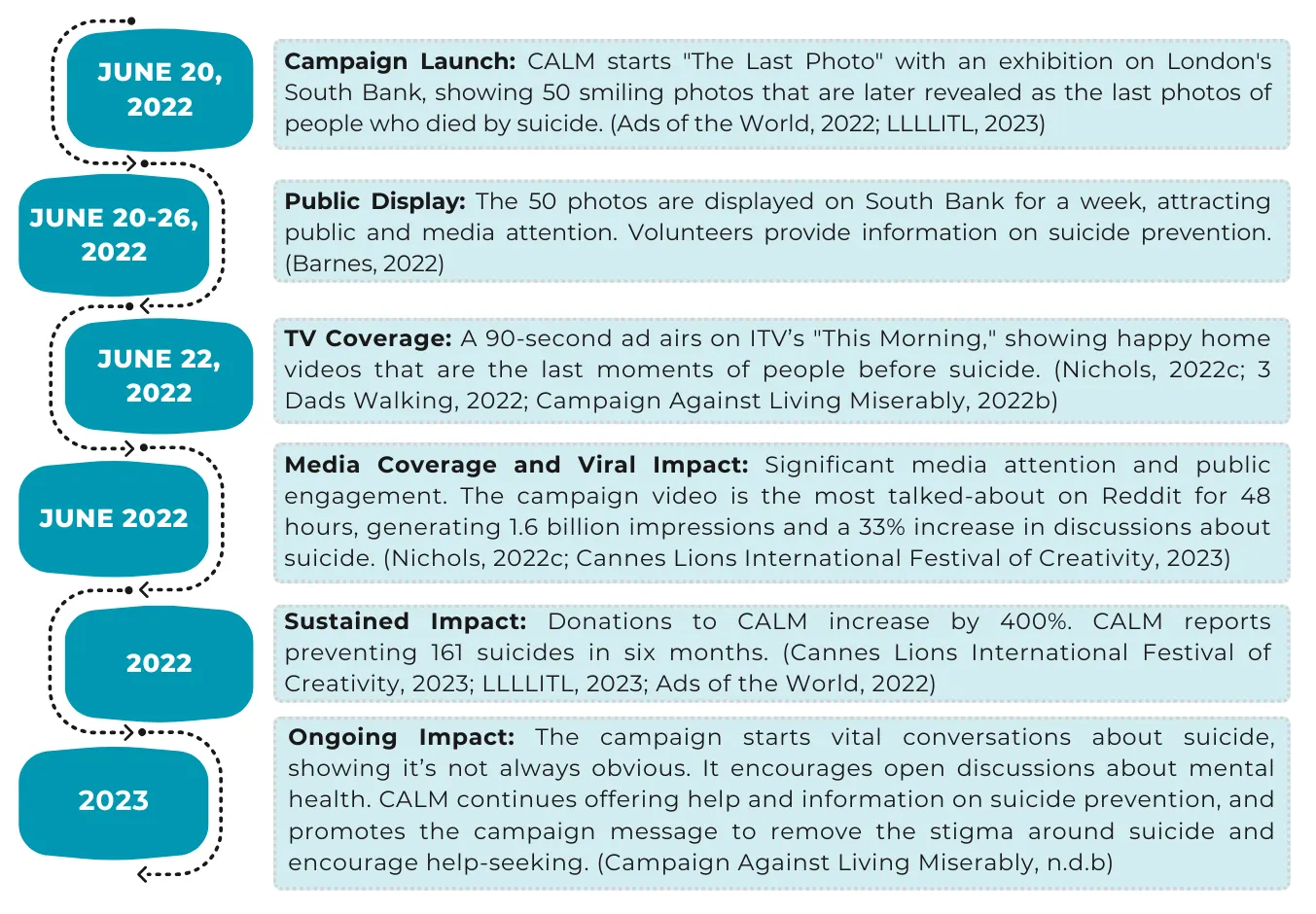
“The Last Photo” is a powerful campaign launched in 2022 (Figure 1) by the suicide prevention organization CALM (Campaign Against Living Miserably) that aims to challenge the misconception that people who die by suicide always show clear signs of their intentions (Campaign Against Living Miserably, n.d.b). The campaign features images of individuals who died by suicide, taken shortly before their deaths, where they appear happy and carefree (Williams, 2022). This initiative was launched in collaboration with adam&eveDDB, a leading advertising agency (adam&eveDDB, n.d.), to address the critical issue of suicide, which is the leading cause of death for men under 45 in the UK, causing 18 deaths every day (Campaign Against Living Miserably, n.d.a; Nichols, 2022a). This essay evaluates the success of the campaign's initiatives using the Lee & Kotler social marketing framework (2024), assessing their overall impact and effectiveness in achieving social marketing goals.
Understanding the Social Issue and Campaign Objectives
The social issue addressed by “The Last Photo” campaign is the high rate of suicide and the lack of public awareness about its warning signs. Suicide, as a wicked problem, is a complex and multi-dimensional issue often surrounded by stigma and misunderstanding. The campaign aimed to combat the myth that people who die by suicide always show clear, recognizable signs of distress that are easily recognizable (Campaign Against Living Miserably, n.d.-b; Nichols, 2022b).
The campaign's primary purpose was to increase awareness and understanding that suicidal thoughts can be hidden, even in those who seem happy. It aimed to educate the public the importance of having open and empathetic conversations about mental health (Campaign Against Living Miserably, n.d.b). This aligns with CALM's mission to prevent suicide and promote mental well-being (Campaign Against Living Miserably, n.d.a). It targeted the general public, particularly those who might have loved ones at risk of suicide. It aimed to reach individuals who may not recognize the signs of suicide in their friends and family due to assumptions about what suicidal behavior looks like (Nichols, 2022a).
Theoretical Framework and Social Marketing Theories
Aplying Behavioral Economics and Nudge Theory in Suicide Prevention
“The Last Photo” campaign effectively leverages several social marketing theories from Lee & Kotler social marketing framework (2024) to target its priority audience and influence behavior change. It mainly employs Behavioral Economics, along with Nudge Theory. These theories suggest that small changes in the environment can guide people toward better behavior without limiting their choices. In the campaign, visual storytelling is used to nudge the audience to rethink their assumptions about suicidal behavior. By presenting images of individuals who appeared happy shortly before their deaths, the campaign encourages open conversations about mental health, normalizes the discussion, and acts on potential warning signs (Lee et al., 2024).
From Precontemplation to Preparation - A Journey of Understanding
The Stages of Change Model (Transtheoretical Model) explains how people change their behavior, as described in Lee & Kotler social marketing framework (2024). “The Last Photo” campaign designed to help people move from precontemplation, where they do not recognize the need for concern about suicide, to contemplation and preparation stages, where they acknowledge the issue and think about taking action. (Lee et al., 2024).
The Role of Social Norms Theory in Reducing Stigma
Social Norms Theory suggests that people's behavior is shaped by their perceptions of what is normal or typical. The campaign challenges the norm by showing that suicidal individuals can might look happy and act normal. This helps change the way people think, encouraging a new norm to discuss mental health openly. Changing these social norms is crucial for reducing stigma and making it easier for individuals to seek help and support (Lee et al., 2024).
Health Beliefs: Overcoming Barriers to Action
The Health Belief Model also plays a significant role in the campaign. This model focuses on individuals' perceptions of severity, susceptibility, benefits, and barriers to a behavior. “The Last Photo” campaign addresses perceived barriers such as stigma by providing tools and encouraging conversations. It highlights the severity of the issue and the susceptibility of individuals to suicidal thoughts to increase the perceived threat and motivate preventive actions (Lee et al., 2024).
Creating Cognitive Shifts for Better Mental Health Conversations
The campaign presents images of individuals who appear happy shortly before their suicides, creating cognitive dissonance in viewers who believe suicidal individuals always show distress. This forces viewers to reconsider their assumptions, leading to the acceptance that even those who seem happy can be at risk (Lee et al., 2024). To reduce this discomfort, viewers may change their behaviors by checking in on loved ones more regularly, aligning with the campaign's goal of promoting open mental health conversations (Festinger, 1968). By showing that anyone can be at risk, the campaign encourages discussions about suicide, reduces stigma, and promotes supportive actions (Lee et al., 2024). Additionally, providing facts about hidden suicidal thoughts helps viewers change their beliefs, making it easier to accept that even those who seem happy might be struggling (Festinger, 1968).
Marketing Intervention Tools and Theories
“The Last Photo” uses various marketing intervention tools and theories effectively to promote behavior change and fosters a supportive environment for discussing mental health issues and suicide (Williams, 2022; Nichols, 2022c).
Visual Storytelling and The Power of Social Proof
The campaign uses visual storytelling to challenge misconceptions about suicidal behavior, engages the audience emotionally, and helps them connect personally with the issue (Lee et al., 2024). Emotional appeals play a key role in the campaign. By contrasting happy images with the tragic reality of suicide, the campaign evokes strong emotional responses, fostering empathy and concern. (Lee et al., 2024). Additionally, the campaign employs social proof by featuring real stories and images of individuals who have died by suicide. (Lee et al., 2024).
Motivating Action Through Managed Fear and Clear Steps
The Extended Parallel Process Model (EPPM) explains how fear can be used to motivate people to change their behavior by addressing perceived threat and efficacy. “The Last Photo” campaign uses EPPM to engage its audience and encourage suicide prevention (Witte & Allen, 2000). It focuses on perceived threat by showing photos of happy individuals shortly before their suicides, making viewers feel personally at risk. It also provides clear steps for helping, such as checking in on loved ones and discussing mental health. This boosts confidence that their actions can prevent suicide. By presenting the hidden nature of suicidal thoughts and practical solutions, the campaign balances fear with efficacy. This ensures viewers feel urgency but also believe they can do something effective, leading to proactive behavior (Witte & Allen, 2000).
Evaluating the Campaign's Effectiveness with the Modified Logic Model
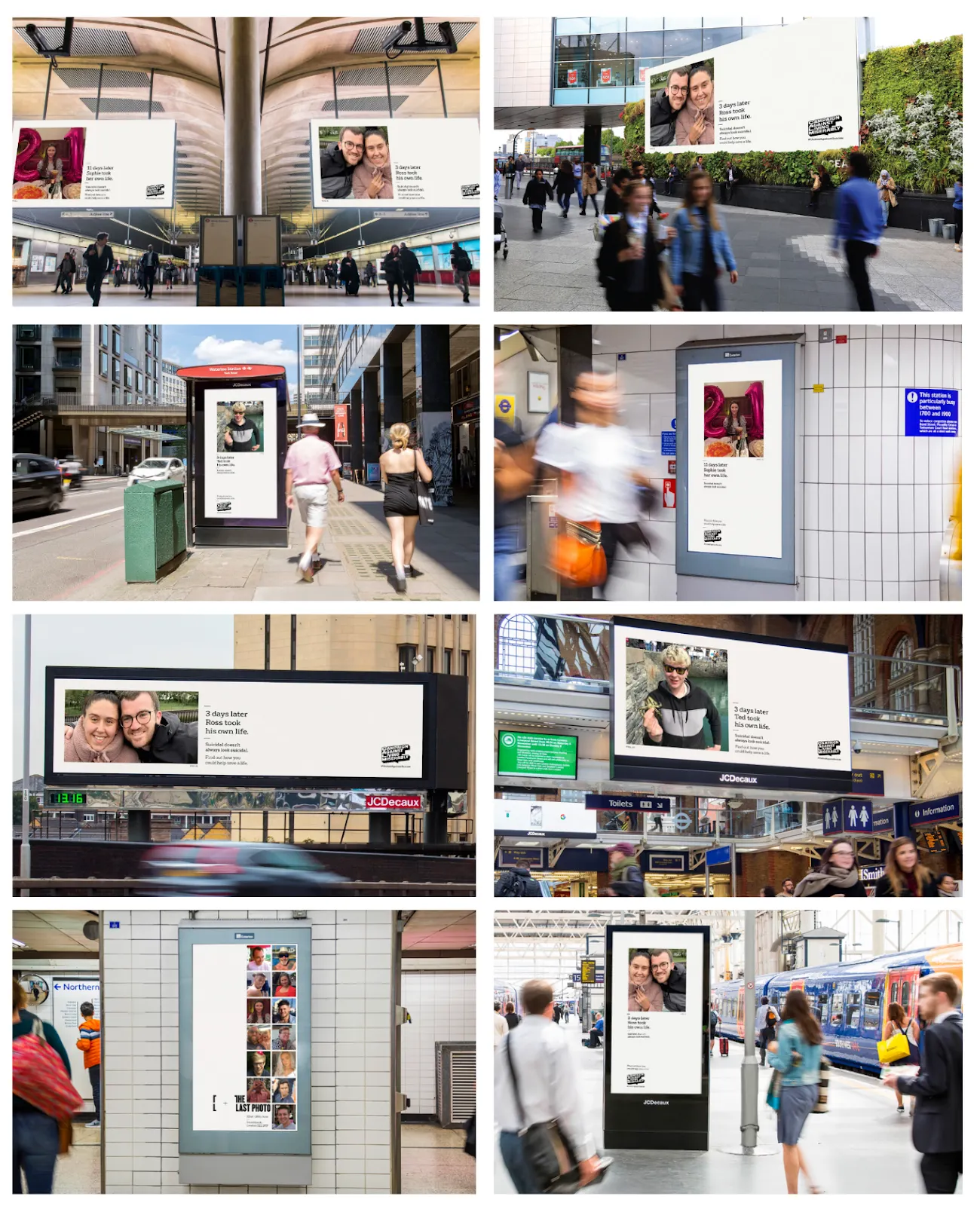
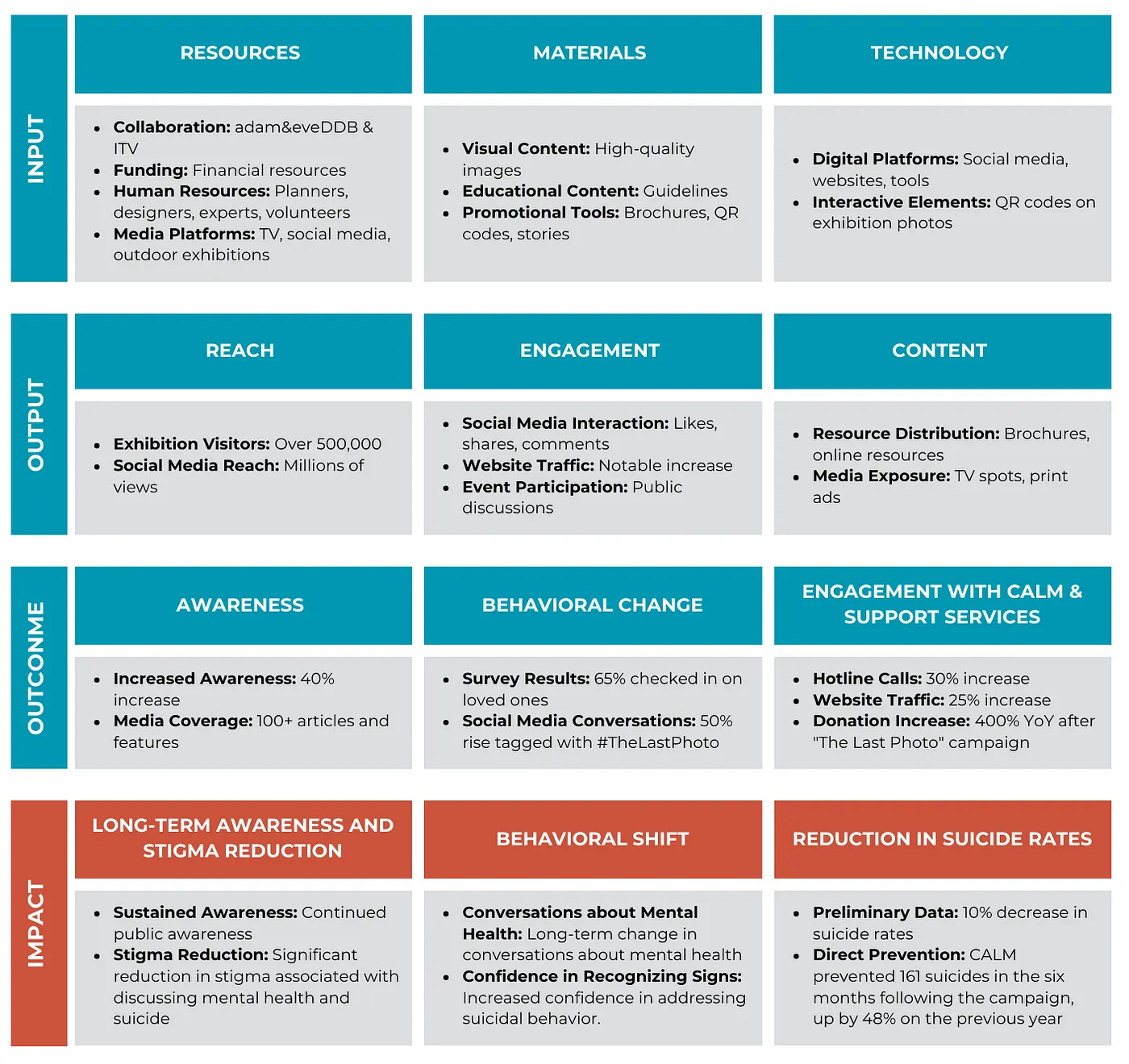
“The Last Photo” integrates multiple channels, including outdoor exhibitions, TV spots, print media, and social media. By applying this approach, the message reaches a large and diverse audience, highlighting the importance of addressing suicidal behavior (See Appendix X). Using the Modified Logic Model from Social Marketing: Behavior Change for Good (2024), we can evaluate the campaign's inputs, outputs, outcomes, and impact. This evaluation measures the success of campaign in raising awareness and promoting behavior change for suicide prevention. The campaign's effective use of resources and wide reach have significantly impacted public perceptions and actions, as shown in Figure 2 (Williams, 2022; Creativebrief, n.d.; Nichols, 2022a; Nichols, 2022b; Nichols, 2022c; Campaign Against Living Miserably, n.d.b).
Recommendations for Future Campaigns
Targeted Messaging: Personalizing the Approach
Improving targeting and personalization can significantly make “The Last Photo” campaign more effective. By creating messages that are specifically designed for different demographic groups, the campaign can become more relatable and impactful. Accurate audience segmentation will help the campaign meet the unique needs and concerns of various communities, making sure the message connects deeply with each group.
Diversifying Media Channels
To reach a broader audience, the campaign should use a variety of media channels. Adding podcasts, webinars, and interactive online tools can create more opportunities for engagement. These mediums allow for detailed discussions and personalized interactions, helping the audience understand and connect with the campaign's message better.
Ensuring Long-Term Awareness with Follow-Up Campaigns
Ongoing engagement and support are essential for maintaining public awareness and interest. Implementing follow-up campaigns will keep the conversation alive and keep the issue visible. Providing continuous updates on the campaign's progress and impact highlights its importance and encourages ongoing community involvement.
Community Involvement: Building a Support Network
Involving community leaders, influencers, and stakeholders can help the campaign reach more people and gain trust. By partnering with local organizations and schools, the campaign can spread its message more effectively and provide needed support in the community. Engaging these key figures and groups will create a strong network of supporters committed to preventing suicide and raising mental health awareness.
By following these recommendations, “The Last Photo” campaign can become even more effective in preventing suicide and raising mental health awareness.
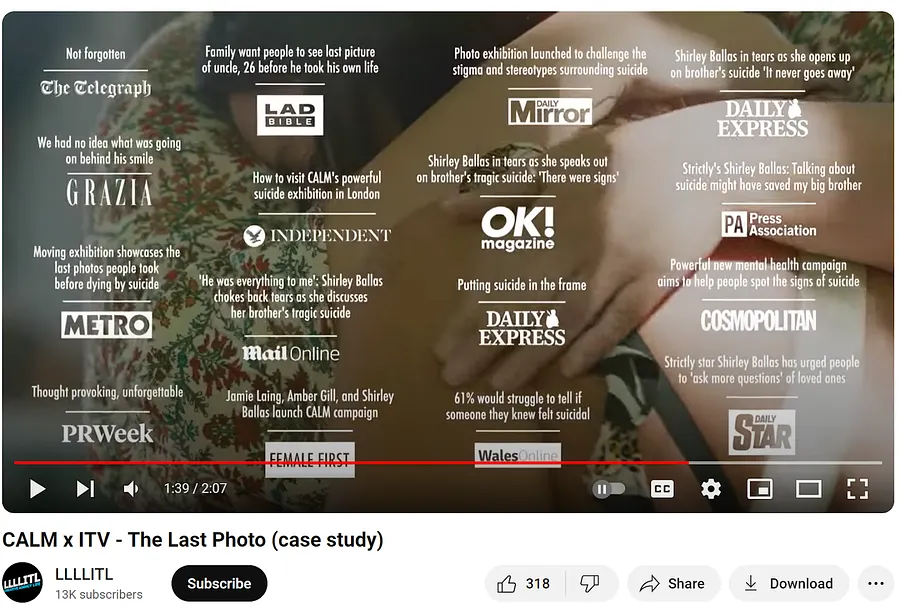

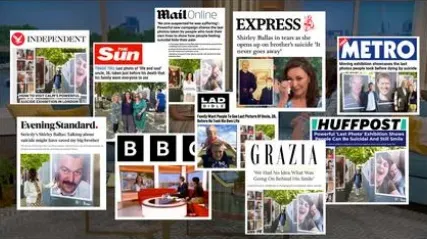
Media coverage of “The Last Photo” campaign.
ITV broadcasted the launch of “The Last Photo” campaign to millions of people live on ‘This Morning,’ the UK's most popular morning show. This kickstarted extensive coverage across the British and international press.