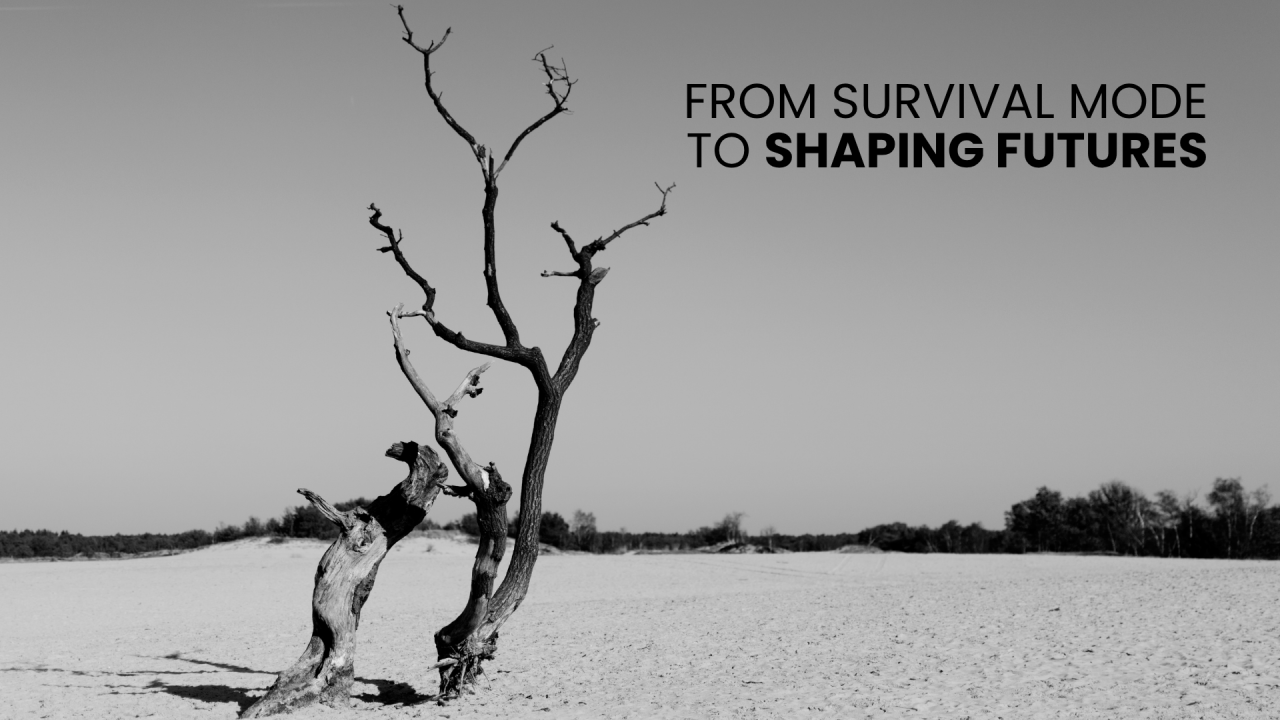
A personal reflection on the silent gap many migrants face, and the agency we often forget we have.
Last week, a conversation in a founders group reminded me how easy it is for many of us, as international founders and knowledge workers, to slip into survival mode. And how powerful even small, collective conversations can be when we shift our gaze toward shaping futures.
A few days ago, a discussion in a startup founders group for internationals in the Netherlands revealed something deeper than the surface topic.
It started with a simple observation: Many of us, as international founders, knowledge workers, and entrepreneurs, often respond to political or policy changes (like new passport laws or elections) in a reactive way, not a proactive one.
But the conversation quickly shifted: Some said, “We don’t have voting rights, so we can’t influence anything.” Others said, “This isn’t the right place to discuss these things.”
On the surface, it was just a debate. But underneath, it exposed a much deeper gap between how different groups think and act:
- Futures-oriented thinking vs. survival-mode thinking
- Proactive agency vs. reactive response
- Long-term horizon vs. short-term focus
- Sense of influence vs. sense of powerlessness
- Systems thinking vs. linear thinking
This isn’t really about misunderstanding each other. It’s about different time horizons and collective awareness levels. Many migrants are still living in survival mode, where futures-shaping feels like a luxury conversation rather than an urgent one.
🔸 But here’s the key insight: Even without the right to vote, there are many ways to influence futures, through narratives, networks, alliances, and shaping public conversations.
🔸 And that’s the hidden opportunity: Instead of waiting for top-down change, we can start small, build collective awareness, and create bottom-up influence.
Sometimes the first step toward shaping futures is not convincing people, but inviting them into a conversation about a longer horizon.
I’m curious: How do you experience this gap between survival and agency in your own journey?
What small, concrete ways have you found to influence futures — even when the system doesn’t give you a formal seat at the table?
Let’s make this conversation visible.